A memorable garden is not measured by its size. It is shaped by how the space makes you feel as you move through it. With thoughtful layers, even a modest yard can become a calm extension of the home.
The best exterior upgrades work together. A clear path invites you in, planting softens the edges, lighting adds atmosphere, and a comfortable destination encourages you to stay.
Give the garden a clear journey
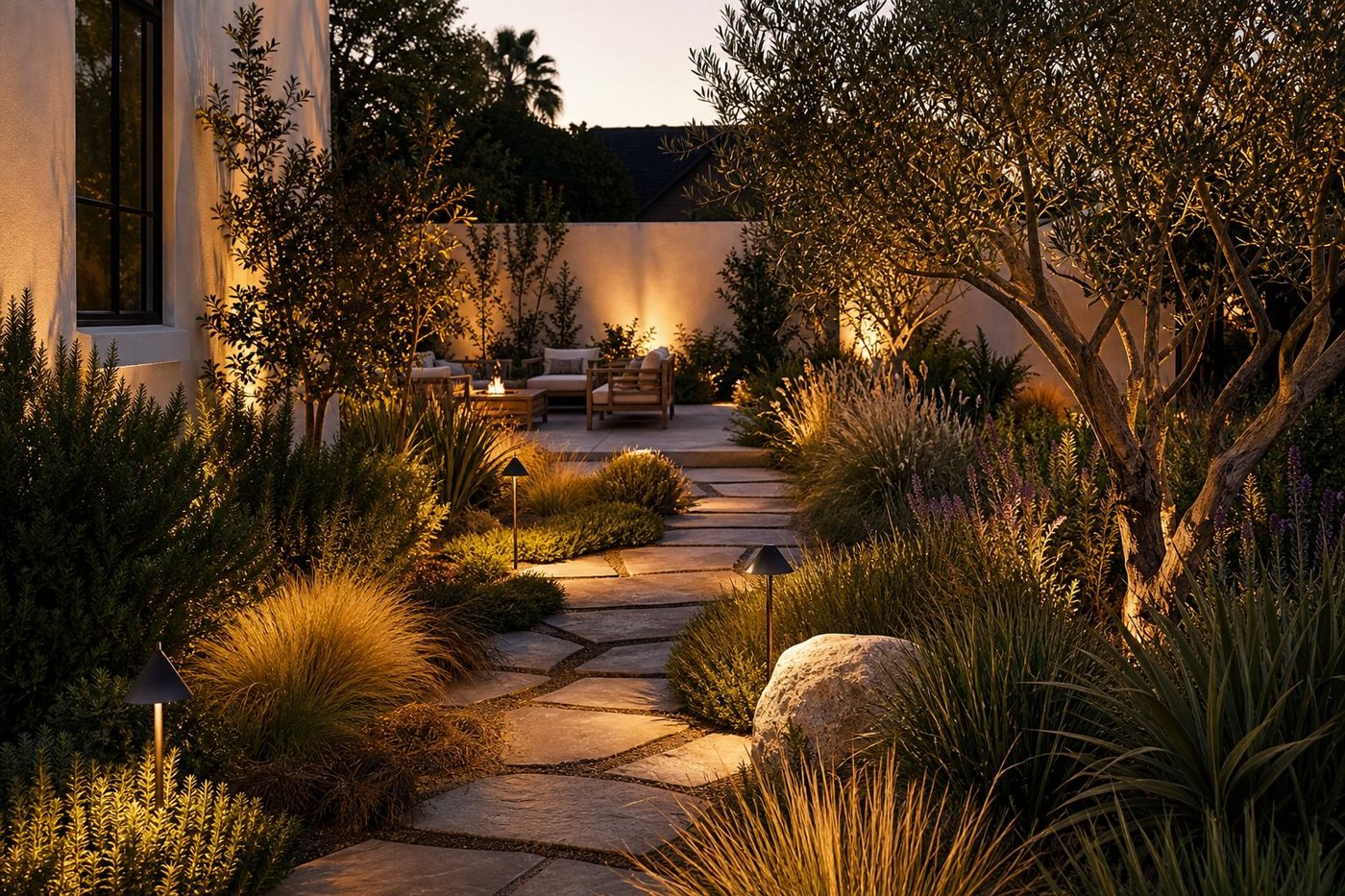
Start by deciding how people will move from the gate or driveway to the front door. A gently curved path can make a compact space feel more intriguing, while a straight path creates a crisp architectural look. Choose a surface that complements the home's materials and remains comfortable underfoot.
Define the path with low planting or subtle edging. This keeps the route legible without making the garden feel confined.
Build planting in layers
Combine canopy, structure, texture, and ground cover. A small tree can provide shade and vertical interest. Evergreen shrubs create a dependable backbone, ornamental grasses add movement, and flowering perennials bring seasonal color.
Repeat a limited palette of colors and leaf shapes throughout the space. Repetition creates calm and helps a compact garden feel intentionally designed.
Use lighting as a welcome
Low path lights, wall washing, and subtle uplighting can transform the garden after sunset. Aim for a gentle glow rather than bright floodlighting. Highlight the doorway, a favorite tree, or a textured wall to give the space depth.
Good garden lighting guides the way while leaving a little mystery for the darker corners.
Choose fixtures that suit the architecture and position them where they can be maintained easily. Warm light usually feels more inviting against foliage and natural stone.
Create a reason to linger
A compact bench, a small bistro table, or a built-in seat can turn an overlooked corner into a favorite spot. Position seating where it catches morning light, evening shade, or a pleasant view back toward the house.
Add outdoor cushions, a side table, and nearby planters to make the area feel furnished rather than temporary.
Protect privacy beautifully
Trellises, slatted screens, hedges, and layered planting can soften boundaries without closing the garden in. Choose solutions that still allow light and air to move through the space.
When privacy is handled as part of the design, it becomes an attractive feature rather than an afterthought.
Keep maintenance realistic
Select plants suited to your climate, soil, and available care time. Group species with similar water needs, mulch exposed beds, and choose durable materials for paths and furniture. A garden that is easy to look after is far more likely to be enjoyed.
With the right balance of structure and softness, a small outdoor space can deliver a generous welcome every time you arrive home.